


With each door opened on the Advent calendar every year, the number of questions about the holidays in relevant fitness forums increases. What and how much can I eat? What do I have to give up? Can I even eat anything from the lavishly set table without ruining my results? These are questions that rightly concern many recreational athletes who don't want to sacrifice their hard-earned achievements on the altar of indulgence. But what if the answer to these questions were completely different than expected? What if we told you that you don't have to give up anything at all? After all, Christmas only comes once a year. This is precisely the answer we want to give you regarding eating habits during the holidays, although of course, it doesn't work without some balance. In the following article, we'd like to explain what preventative measures you can take to avoid appearing to your family like a hungry and grumpy Grinch during the Christmas holidays. Consider it a small Christmas gift from us to you.
Tip 1 - Reduce your carbohydrate intake six days before the feast.
If we take a closer look, most Christmas menus are teeming with delicious carbohydrates, which we naturally don't want to miss out on, especially during the holidays. What would a good venison goulash be without the accompanying dumplings? Not to mention gingerbread, cookies, and Christmas stollen. So, what's the best way to deal with this carbohydrate overload without having to give anything up? It's quite simple: reduce your carbohydrate intake a few days before the upcoming feast so that your glycogen stores in your liver and muscles are depleted. This drastic reduction in carbohydrate intake should begin three days before Christmas and be around one gram per kilogram of body weight per day. After you've made it through this period, it gets really tough again, especially since it's so close to Christmas. In the remaining three days, you cut your carbohydrate consumption by exactly half to 0.5 grams per kilogram of body weight per day. On the big day, you have the great advantage that the feast acts like a classic refeed day, getting your metabolism back on track after the relatively long low-carbohydrate phase. Consequently, even short-chain carbs from cakes and cookies don't end up as fat on your hips, but are stored directly in your glycogen reserves.
Tip 2 - Intermittent Fasting
Provided you have enough time to prepare, it's certainly no problem to follow a low-carb diet in preparation for a feast. But what do you do if you're invited to your third cousin's house or a spontaneous Christmas party at short notice and don't have much time to prepare? Well, you could, of course, go to the party, ignore the buffet with glum, and spend the whole evening grumbling at the salad bar while everyone else around you tucks into the roast goose. Since this isn't a satisfactory solution, we'd like to offer you an alternative. The way out of this seemingly hopeless situation is called intermittent fasting, or IF for short. Although intermittent fasting is actually a long-term diet strategy that's excellent for reducing body fat, that doesn't mean the concept can't also be beneficial in the short term. With this simple trick, you can even get through the worst cheat day without major damage. The problem, however, lies in not consuming any solid food for a full day, but this is merely a mental hurdle once you've made it through the first few hours. The only things allowed during this period are alcohol-free and largely calorie-free beverages such as water, black coffee, or unsweetened tea. But when you finally arrive at the festive table after this ordeal, you certainly don't need to feel guilty.
Tip 3- Exercise before eating
Another strategy for preparing for a Christmas party, even at short notice, is to simply squeeze in a workout beforehand. Of course, a half-hearted, half-hearted workout won't cut it in the face of a big holiday meal, so you need to make sure you give it your all. In addition to intensity techniques like supersets or giant sets, a short cardio session based on the principles of high-intensity interval training (HIIT) is essential to burn as much energy as possible. Use the rest periods between sets for other activities as well. For example, you could work your abdominal or calf muscles. If possible, schedule your workout as close as possible to the holiday meal. Leaving three hours beforehand is ideal. After such a workout, a Christmas dinner is the perfect way to replenish your energy reserves and kickstart the anabolic recovery process. No matter what you put on the table, it won't noticeably harm your figure in any case.
Tip 4- Supplements can help you
While the three previous tips were basically about how you can make food work for you and your goals, this last, and admittedly somewhat more extensive, tip deals with dietary supplements that can help you minimize the potential damage that the holidays can cause to your figure.
As with everything, there are of course scientists who have addressed the issue of holiday meals. A team of Canadian and Australian researchers recently discovered that drinking protein shakes, and especially those with a high whey content, significantly reduced feelings of hunger. Accordingly, test subjects who consumed a shake an hour before the meal ate considerably less than the control group. This is due, in part, to the release of the two appetite-suppressing hormones cholecystokinin and GPL-1. Furthermore, in a comparative study, the scientists revealed that consuming 20-40 grams of whey protein immediately before a meal leads to significantly more stable insulin levels and considerably weaker characteristic spikes. This lower insulin release also contributes to a reduced likelihood of body fat storage.
-
Green Tea Extract
Green tea extract has long been considered a relatively effective fat burner. However, new studies now suggest that the extract also influences the absorption of starchy foods. Specifically, it was found that epigallocatechin, contained in green tea extract, inhibits the release of the two enzymes alpha-glucosidase and alpha-amylase, which are responsible for breaking down starch molecules into smaller units. If these enzymes are not present in sufficient quantities, some of the starch cannot be converted into an absorbable form, meaning that some of the carbohydrates remain unused for energy. Green tea extract thus acts as a kind of carb blocker.
-
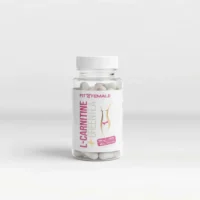
L-carnitine
Much has already been written about the role L-carnitine plays as a fatty acid transporter in energy metabolism. However, a recent study has revealed facts that are particularly relevant in the context of holiday-related issues. In this study, selected participants were given two grams of L-carnitine twice a day for twelve weeks and an additional 180 grams of carbohydrates were added to their diet. The control group received the same amount of carbohydrates but did not take the L-carnitine. The result was surprising: unlike the participants in the control group, the subjects in the L-carnitine group did not gain body fat. It is therefore reasonable to assume that taking L-carnitine may help reduce the negative effects of a heavy meal.
-
 L-Carnitine + Greentea
CHF 22.90 incl. VAT
L-Carnitine + Greentea
CHF 22.90 incl. VAT
-
-
Boost your metabolism with caffeine
Caffeine is a very versatile substance that can increase both mental and physical performance. In addition, caffeine consumption promotes the release of fat from the body fat deposits and, on the other hand, prevents new fat from being stored. As a result of the stimulating effect on the nervous system, you can also perform better during training without realizing it, and burn extra calories along the way.
Since everyone reacts differently to caffeine, you should take things slowly. At least, if you are not already a coffee drinker. If you don't like coffee or energy drinks, you can also use the appropriate dietary supplements. The advantage is that these are very easy to dose, especially compared to coffee.
The Pink Burn has serving (12g) incredible 200mg caffeine content. 1 can of energy drink has just 80mg of caffeine per 250ml. The Pink Burn is very effective due to its unique effect especially before 30min before training. In addition to caffeine, the 2 in 1 fat burner and training booster also contains other exciting ingredients to stimulate the metabolism.
-
Eat more fiber
Dietary fiber has numerous benefits for your health, because it supports the health of your heart, among other things. But they can also effectively help you burn fat, for example by stabilizing blood sugar levels. In addition, fiber has the ability to swell in the digestive tract through contact with liquid. Flavourite contains 85% fiber and almost no calories!
The resulting mass provides a long-lasting feeling of satiety and prevents you from unintentionally eating too much. Good sources of fiber are green leafy vegetables, legumes and oatmeal. In addition, there are fiber-rich supplements such as glucomannan, which serve the same purpose and can be dosed very well.
-
Biotics Supermix
CHF 35.90 incl. VAT
-

Conclusion
Before you ask: Yes, you can apply all the tips mentioned at once. However, with all the ambition to minimize the negative effects of the holidays, don't forget that Christmas only comes once a year, and you should treat yourself without feeling guilty. With that in mind, we wish you happy holidays.
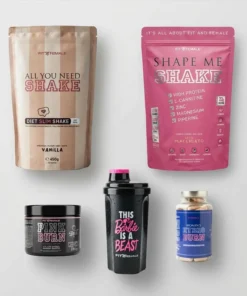
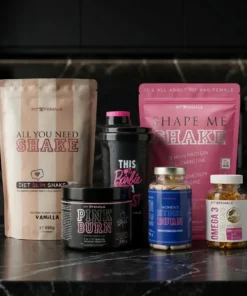
If you need more help with products and intake, we have just the thing for you with the Premium Fatburn Bundle. In addition to 5 selected products for weight loss, you get an income plan (for training days and non-training days) including many valuable tips for fat burning.


 Home
Home WEIGHT LOSS & SHAPING
 FITNESS & ENERGY
 Glow & Wellbeing
 Bundle Deals
 SHAKER & MORE
 DISCOVER
 Shakes
 Collages
 Booster & Focus
 Sated & Slim
 All products