

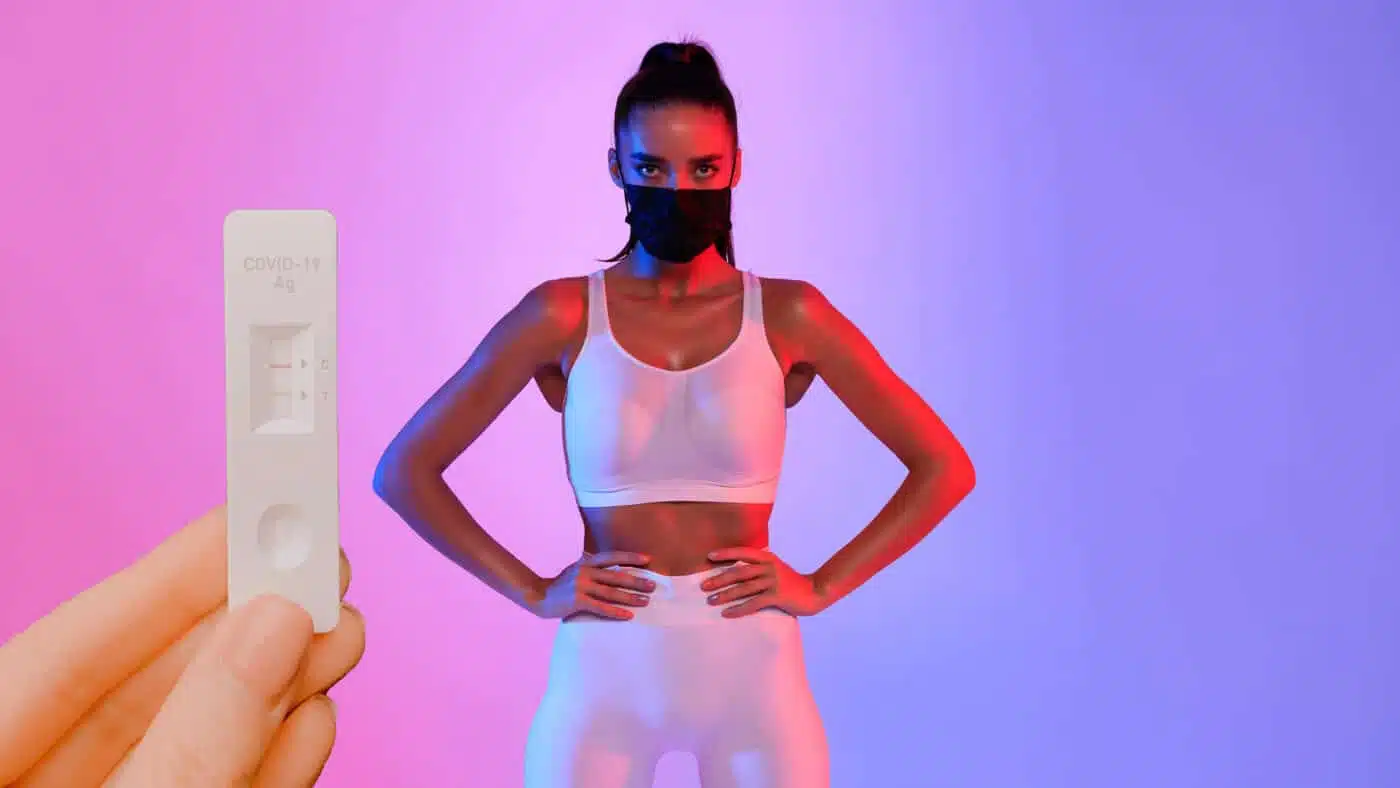
Let's face the facts: The coronavirus is now a part of our lives. According to experts, the virus will become endemic, joining the ranks of various nasty cold viruses. This means that despite protective measures, everyone will eventually get it. But what does that mean for us athletes?
Are special measures necessary, or is it similar to other known illnesses like the flu or flu-like infections? How long do I need to rest? Is a week enough, or do I need to start again very slowly after days of bed rest? We shed light on the matter and answer the most important questions.
Why it's so important to protect yourself after a coronavirus infection
You've finally recovered from a COVID-19 infection and are now eager to get back into shape? Then it's time to grab your workout clothes and head to the gym to give it your all, right? Wrong. Just because the test is negative doesn't mean everything is back to normal.
After recovering from an infection, your body is still busy with repairs. These repairs will be more extensive the more severe your symptoms were. But even if you were symptom-free, you should take it easy. The reason is simple: COVID-19 can damage the heart.
Sports medicine specialists and cardiologists repeatedly emphasize that the blood vessels of the heart can also be attacked by the coronavirus. Even in mild cases, returning to exertion too soon can lead to myocarditis (inflammation of the heart muscle). This can result in heart failure and, in the worst case, sudden cardiac death.
Jumping straight back into high-intensity training is therefore not a good idea. This isn't anything new, by the way. Even after any cold or flu, you should actually take it easy on your body and gradually reintroduce it to physical exertion. Ironically, one could be thankful to the coronavirus for bringing the topic of "resting after illness" to the forefront of public awareness.
When can I start training again?
Take this to heart: While you are positive, intense exercise is absolutely forbidden. Whether you have symptoms or not is irrelevant. Take a break from exercise for at least seven days starting from the day you first test positive. Only after these seven days and a negative test should you even consider resuming any physical activity.
If you still test positive for the coronavirus after seven days, the mandatory break will be extended. To best support your body during the "positive phase," you should drink plenty of water, get enough sleep, and eat a diet rich in both protein and vitamins. Once this phase is over, the timeline for returning to sports depends on the course of your infection.
Infection without symptoms
If you have an asymptomatic infection, you should avoid strenuous activity during quarantine. However, you don't have to be completely inactive. Light stabilization exercises and training on a stationary bike at your recovery heart rate are perfectly fine. After quarantine, you can gradually resume moderate training.
During this 7-day period, you should still listen carefully to your body. If you experience any signs of weakness or heart problems, reduce your exertion immediately. Approximately 14 days after your negative test result, you will generally be able to resume full activity and be on the safe side with intensive training.
Infection with mild symptoms up to the throat
If you have cold symptoms, training is off-limits until the symptoms have completely subsided. "Mild symptoms" include sore throat, pharyngitis, loss of taste and smell, headache, and a runny nose. Once the symptoms have cleared, you can gradually increase your training intensity.
For the first five to seven days, light training at a recovery heart rate is recommended. This is followed by seven to ten days of moderate training. After approximately 12 to 18 days, you will be fully recovered and can resume intensive training. Again, listen to your body's signals.
Infection with mild symptoms below the neck
If your symptoms also affect your trachea and lungs, including a fever above 38 degrees Celsius, we strongly recommend that you see your doctor. You should only resume light exercise once you are completely symptom-free. This can take up to 14 days in the best-case scenario, but in more severe cases, it can take four to six weeks.
Starting training too soon significantly increases the risk of myocarditis. Therefore, we strongly recommend that you have an examination by your family doctor before resuming training. This should include a general check-up as well as an echocardiogram and a stress ECG.
You can gradually resume training in consultation with your doctor, following the previously mentioned 7-day increments. Important: If you have been diagnosed with myocarditis, a break from sports of at least three months is necessary.
Severe infection requiring hospitalization
After a severe COVID-19 infection requiring hospitalization, returning to sports is a very individual process. We cannot offer any advice on planning your exercise program remotely. With such a severe infection, close cooperation with your treating physicians and your family doctor is essential.
Only specialists can assess the extent of the damage to your organ systems and determine when and in what form you can return to sports. However, you should generally expect to wait several months until you regain your full physical capacity.
Is it possible that I will no longer be able to do any sport?
In rare cases, it can unfortunately happen that you are unable to do any sport for a very long time. This is the case, for example, if your lung tissue has been severely damaged by the disease.
Even if you are suffering from the long-term illness Long Covid, symptoms such as fatigue, shortness of breath, and others may make training impossible. A study from the Indiana University School of Medicine shows that Long Covid patients experience a significant worsening of their symptoms when exercising.
In the case of a long-term COVID-19 infection, close medical monitoring is extremely important for a return to training. This is especially true given that much more medical research is needed to fully understand long-term COVID-19.
Which products make sense?
There are generally no restrictions here. Often, you feel a bit sluggish and less energetic during training. The following products can help before and during your workout.
-
 Pink Burn (2 in 1)
CHF 39.90 incl. VAT
Pink Burn (2 in 1)
CHF 39.90 incl. VAT -
 Collagen Energy
CHF 32.90 incl. VAT
Collagen Energy
CHF 32.90 incl. VAT -
TRAIN - Benefit
CHF 33.90 incl. VAT
Conclusion: Always listen to your body
Finally, we have some good news for you: In most cases, after a coronavirus infection, you can easily return to sports following a similar pattern as with many other cold-related illnesses.
Medical supervision is advisable, at the latest, if you have experienced significant symptoms. However, the general rule also applies when returning to exercise after an asymptomatic infection: listen to your body's signals.


 Home
Home WEIGHT LOSS & SHAPING
 FITNESS & ENERGY
 Glow & Wellbeing
 Bundle Deals
 SHAKER & MORE
 DISCOVER
 Shakes
 Collages
 Booster & Focus
 Sated & Slim
 All products