

Abs guide for women: a defined midsection does not come from one exercise or a short diet. It comes from combining practical nutrition, regular strength training, well-dosed cardio and enough recovery.
This guide helps you organise those pieces without building your whole life around an extreme programme. You will find clear priorities, practical examples and a framework you can adapt to your schedule, training level and goals.
How to use it: start with the basics, then choose only a few actions and observe your energy, strength and overall feel for several weeks. Visible abs are not a short-term test; they are the result of habits you can keep.
What really matters
Visible abs depend on several factors: the muscle in your midsection, individual fat distribution, genetics and how consistently you train and eat. You cannot control all of these. You can influence how you build muscle, how much you move each day and how dependable your routine is.
- Muscle: your abdominal muscles need a training stimulus and time to develop.
- Body composition: a gradual change in overall body fat can make definition more visible; you cannot choose one area for fat loss.
- Consistency: a plan that works during busy weeks is more valuable than a perfect plan you abandon after a few days.
Your stomach can look individual and still be strong. Do not compare yourself with edited images or with a body that has different circumstances. Set process goals instead: regular sessions, controlled repetitions and a reliable meal structure.
The realistic route to visible abs
Start with the fundamentals and add detail only afterwards. This keeps it clear what is useful and what merely adds complexity.
- Structure your meals: include a protein source, vegetables or fruit, suitable carbohydrates and a source of fat so you stay satisfied and ready to train.
- Progress your strength work: choose exercises you can control and gradually increase repetitions, resistance or movement quality.
- Move regularly: daily activity and cardio complement strength training rather than replacing it.
- Recover: sleep, breaks and flexibility during stressful periods keep the routine sustainable.
If you are starting out, do not change everything at once. Set one strength appointment, one simple cardio session and one meal you can prepare reliably. After several weeks, adjust according to performance and how you feel.
Nutrition: the base of your definition
If you want to reduce body fat, a moderate energy deficit is the relevant lever. It should not be aggressive or leave you constantly hungry, exhausted or thinking only about food. A varied diet with enough protein, fibre and fluids makes a regular training routine easier to maintain.
A simple plate
- Include a protein source such as eggs, yoghurt, beans, fish, tofu or lean meat.
- Fill a generous part of the plate with vegetables or fruit and vary the colours across the week.
- Add carbohydrates such as potatoes, rice, oats or bread according to your hunger and activity.
- Use a fat source such as nuts, seeds, olive oil or avocado in an amount that suits the meal.
What helps in daily life
Repeatable meals do not mean giving up variety; they simply reduce decisions. Prepare a protein source and a side, keep fruit or vegetables easy to reach and drink regularly. Enjoyment stays part of the plan: one meal does not decide your progress, the average structure of your week matters more.
Avoid crash diets and rigid rules that can lead to intense hunger or giving up. If you often feel tired, very hungry or unusually weak in training, review the total amount, meal distribution and recovery.
Protein and meals: make it practical
The easiest approach is to spread protein across several meals. You do not need to fit the whole day into one shake or one large serving. Choose foods you enjoy first and use a powder when it saves time or fills a gap in a meal away from home.
For a quick breakfast or a post-workout snack, the Shape Me Shake can be a practical option. According to the product information, 30 g of powder provide 22.4 g of protein. Prepare it as stated on the product page and label, and treat it as part of your meals rather than a replacement for a varied diet.

If you want a high-protein shake that is quick to prepare, Women’s Whey Isolate is another option. One 25 g serving provides 22 g of protein according to the product information. What matters is that it fits your overall diet and that you tolerate it well.

A simple daily structure could be a protein-based breakfast, a normal lunch with vegetables and a side, a snack around training if needed and a satisfying dinner. Exact timing matters less than a structure you can follow on workdays.
Cardio that fits your life
Cardio increases total movement and can improve fitness. For a defined midsection it is not punishment and it does not replace strength training. Choose a form you can do regularly without unnecessarily compromising recovery.
Easy sessions
During brisk walking, cycling, swimming or using an elliptical, you should still be able to speak in short sentences. Start with two or three easy sessions each week and adapt duration and pace to your current level. Active transport also counts when it raises your daily movement.
Intervals with restraint
Intervals alternate demanding sections with easier movement. They can suit people who already train, but they are not mandatory. Begin with a few repetitions, warm up and stop if your technique or body signals clearly deteriorate.
Progress without pressure
Increase only one factor at a time: duration, pace or the number of sessions. If your strength work suffers, reduce cardio volume first. Progress also means recovering quickly and keeping enough energy for everyday life.
Ab training: tension and progression
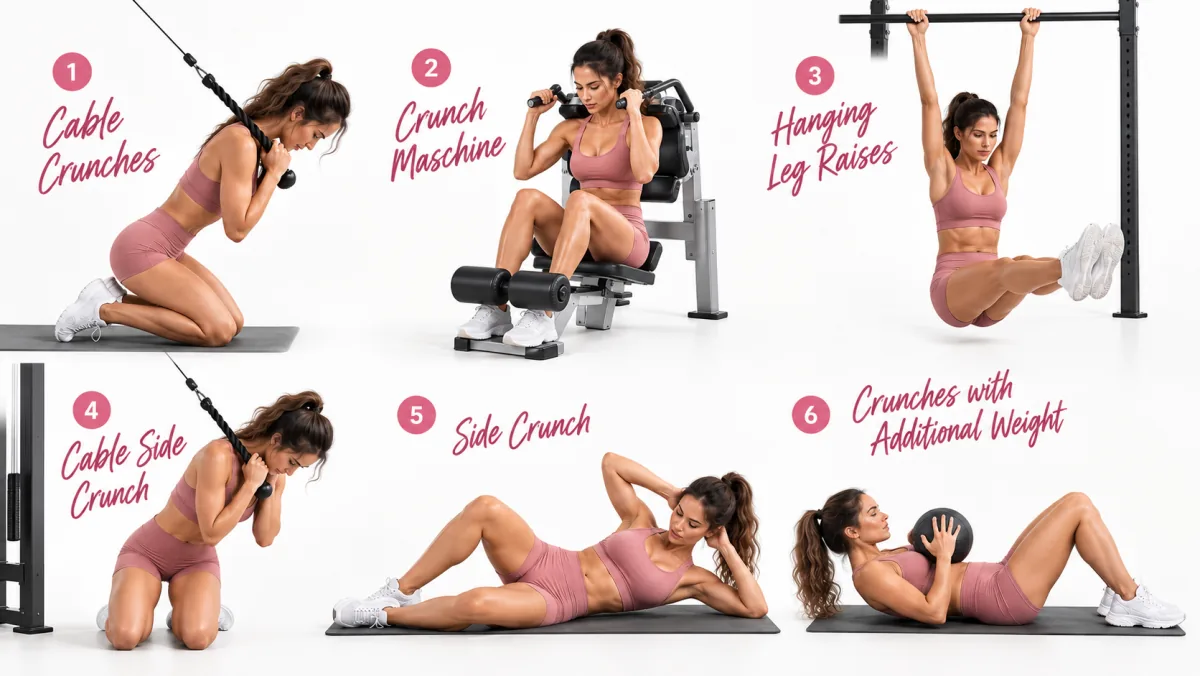
Train your midsection like any other muscle group: controlled movement, sufficient tension and gradual progression. You do not need a daily ab challenge. Two well-planned sessions per week are a useful starting point when you use good technique and train the rest of your body as well.
- Cable crunch: bring the ribs towards the pelvis under control instead of folding from the hips.
- Reverse crunch: slowly curl the pelvis and avoid swinging the legs.
- Hanging knee raise: keep the torso still and lead with the midsection rather than momentum.
- Side plank: push the floor away and keep a straight line from shoulder to foot.
- Pallof press: resist rotation and keep breathing calmly throughout the movement.
Choose two to four exercises per session and end a set while you still control the position. Once the movement is secure, increase resistance, hold time or repetitions without losing quality. Muscle effort is normal; sharp pain, numbness or back symptoms should be assessed.
A simple framework for the next weeks
Use an eight-week framework as an orientation, not a promise of a particular look. It helps you build workload gradually and check that the plan still fits your life.
- Start: set two strength appointments, one easy cardio session and a repeatable meal routine.
- Build: add a little resistance or better repetitions to selected exercises and increase daily movement.
- Stabilise: keep the structure during busy weeks and deliberately schedule lighter days.
- Review: compare performance, energy, sleep and how you feel. Photos or measurements are optional and should not add pressure.
If your cycle, an injury, medication or a diagnosis affects your ability to exercise, adapt the plan and seek professional advice when needed. A good plan is flexible enough to support you.
FAQ about ab training
Can I lose fat only around my stomach?
No. Your body decides which stores it uses for energy. Nutrition, strength work and movement can influence overall body composition, but not a single chosen area.
How often should I train my abs?
Start with two quality sessions each week and allow time to recover. If technique and recovery are good, increase volume gradually.
Is cardio compulsory?
No. Strength training, nutrition and daily movement can already provide a solid base. Cardio is an additional way to develop fitness and movement; choose an activity you enjoy.
What if the plan creates pressure?
Reduce the goals to behaviours you can control: regular meals, a few good sessions and enough breaks. If food or body image creates lasting stress, speak with a qualified professional rather than adding more restrictions.
Conclusion: consistency over extremes
A defined midsection comes from muscle training, a suitable eating structure, reasonable movement and recovery. You do not need daily crunches or a radical diet. Choose a few steps that fit your life, review them regularly and give your body time to respond.


