


The world of macro- and micronutrients is not only fascinating, but also significantly more complex than various glossy lifestyle magazines would have us believe. Consequently, it's no wonder that the common misconception is that all protein is the same. In reality, however, this couldn't be further from the truth, as there are distinct classes of proteins, each defined by its own unique properties and having its own specific applications in the fitness field. In the following article, we will therefore take a closer look at... Isolat throw.
What is whey protein isolate?
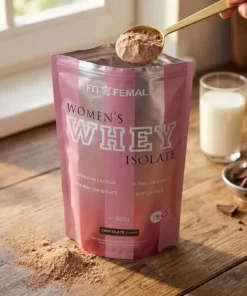
If you've ever browsed a fitness store, you've probably noticed that many manufacturers advertise whey protein isolate as the ultimate protein supplement. But what exactly is it? Essentially, it's a special type of whey protein, derived from milk just like casein, and characterized by its particularly rapid absorption into the bloodstream. Whey protein manufacturers typically use concentrates with a protein content of 29-80 percent, with the protein content being limited to a maximum of 80 percent. Furthermore, conventional whey protein supplements contain relatively high amounts of fat and carbohydrates, which isn't necessarily ideal for all athletes and fitness goals. Isolates differ from concentrates primarily through a special production process that allows the protein content to exceed 90 percent. In return, the amount of fat and carbohydrates is reduced to well below one percent. Furthermore, the finished product contains only a minimal amount of lactose, which offers numerous advantages, especially for allergy sufferers.
Our new isolate has 97% protein, is ultra low carb & lactose, sugar-free and simply delicious.
What are the advantages and functions of Isolat?
Before we delve into the specific advantages of whey protein isolate, it's necessary to first explain how whey protein works in general. Due to its amino acid composition and resulting molecular structure, whey protein is characterized by its rapid absorption by the body. The amino acids it contains enter the bloodstream quickly, making them readily available to the body as building blocks for new cells or for repairing damaged cells. In strength training, whey protein is therefore particularly suitable for supplying the body with urgently needed amino acids after a strenuous workout or a long night without food, allowing the body to utilize them as quickly as possible. In this respect, isolates do not differ from traditional concentrates. However, the crucial difference lies in the macronutrient composition, as already mentioned. Because whey protein isolate has a significantly higher protein content and a considerably lower fat and carbohydrate content, these supplements are especially effective during professional competition preparation. However, the far more important advantage is the almost complete absence of lactose, which means that even athletes with lactose intolerance can benefit from the advantages of whey protein for muscle building and fat burning.
What are the disadvantages of whey protein isolate?
Strictly speaking, there are no significant disadvantages to protein isolates, either in terms of the products themselves or their intended uses. Both the higher protein content and the absence of fat and carbohydrates inherently demonstrate the superior quality of these products. The only drawback, however, stems from this inherent quality, as it necessitates costly production processes. Understandably, manufacturers pass these costs on to the final product, resulting in a kilogram of isolate costing considerably more than a kilogram of concentrate. However, if you are forced to use such an alternative for health reasons in order to benefit from protein supplements, then this additional cost should be worthwhile.
When and how should I use whey protein isolate?
Typically, readily available proteins are needed immediately after training, regardless of whether it's cardio or strength training, as the stressed muscle structures should be supplied with nutrients as quickly as possible in both cases. In practice, and based on scientific studies, it has proven beneficial to consume a post-workout shake consisting of 0.5 grams of whey protein isolate and approximately one gram of maltodextrin per kilogram of body weight to provide the body with the necessary amount of nutrients. If you have to avoid various protein sources in the morning due to lactose intolerance, it's also worthwhile to drink a shake containing roughly the same amount of protein as the post-workout shake right after waking up.




 Home
Home Weight Loss & Shape
 Fitness & Energy
 Glow & Wellbeing
 Bundle Deals
 SHAKER & MORE
 Discover
 Shakes
 Collagen
 Booster & Focus
 Sated & Slim
 All Products